Capstone | Fall 2025
LIFE. Designing a human-like experience for mental health involving AI
and Real-Life Therapy.
Hi, my name is Donchelle Santiaguin, and today I’m presenting my capstone project, LIFE.
This project is deeply personal to me—rooted in my desire to give back to the community. There was once a little girl who was taken from her mother and placed into the foster care system. Her father fought for her, and she grew up being moved back and forth, just wanting peace. No child should have to carry that kind of emotional weight.
She remembers sitting in quiet rooms with strangers, being asked to talk about her feelings— a huge task for someone so young. The sandbox, the blank papers… those tools became ways to express what she couldn't yet verbalize. That little girl was me.
At four years old, I was already in therapy, trying to make sense of things I couldn’t understand. As I got older, I wondered how many other children felt the same—unsupported, unheard, or unsure where to turn.
That’s where LIFE. was born: from a simple desire to build a safe, human-like space where young people can feel seen, understood, and supported.
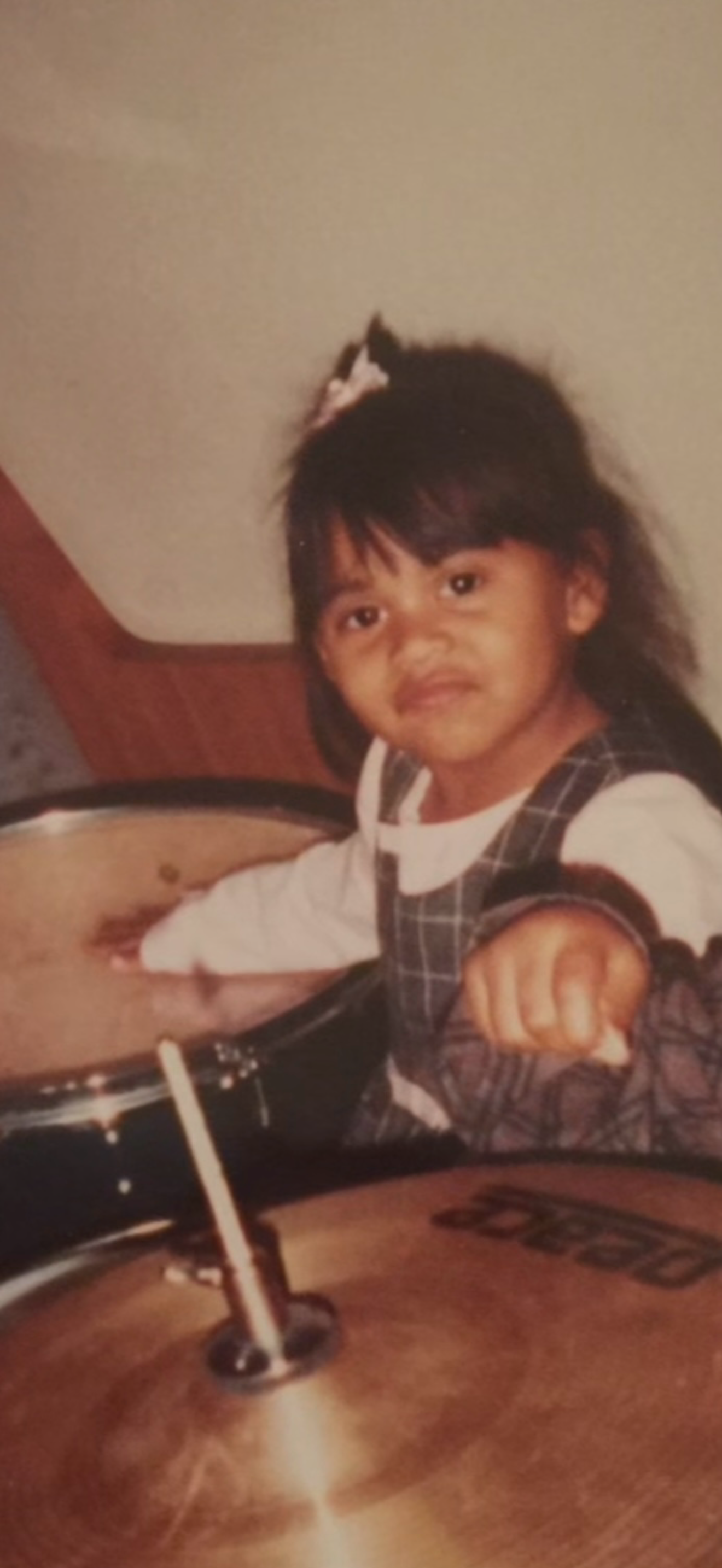
Donchelle, 4 years old – Music Therapy Session
Communicating with a therapist is rarely simple and often comes with both challenges and benefits. Barriers such as cost, insurance, cultural sensitivity, lack of personalization, privacy, and language differences can make access difficult. At the same time, therapy can create space for feeling heard, gaining comfort, encouraging personal reflection, and fostering new perspectives that support healing across generations.
Build a warm, safe, intuitive mental health experience that feels human-like involving both AI and real therapists.
LIFE. is a private, free mental wellness app that supports you every day. It helps with common emotional struggles
using AI guidance and optional access to licensed therapists. LIFE. gives users a safe, human-like, judgment-free space to
understand their feelings, build resilience, and improve their mental health one day at a time.
To provide an accessible and supportive mental wellness
experience by addressing nine common emotional challenges—stress, anxiety, low self-esteem, depression, insomnia, social anxiety, PTSD, overthinking, and compulsion.
LIFE. focuses on school-enrolled youth facing emotional, academic, and social pressures. Research highlighted growing mental health concerns and gaps in accessible support.
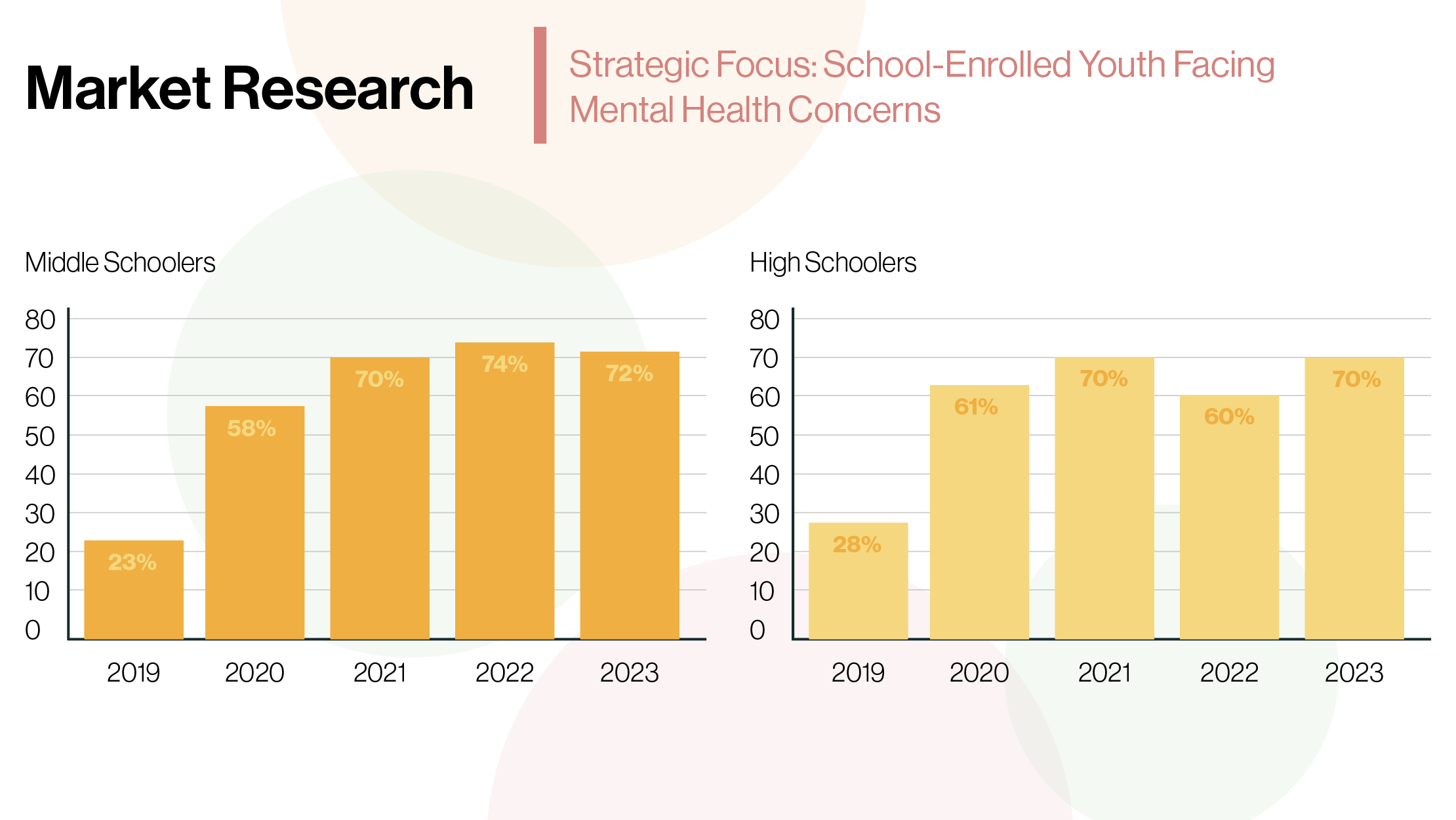
Data collected from 2019-2023 shows significant increases in reported emotional struggles among both middle and high school students. Middle schoolers reported rising levels of stress, sadness, and difficulty focusing—jumping from 23% in 2019 to over 70% by 2023.
High schoolers followed a similar trend, with emotional fatigue rising from 28% to 70%.
These patterns reflect the urgent need for early, accessible support systems that feel safe and familiar.
https://www.cdc.gov/healthy-youth/mental-health/index.html
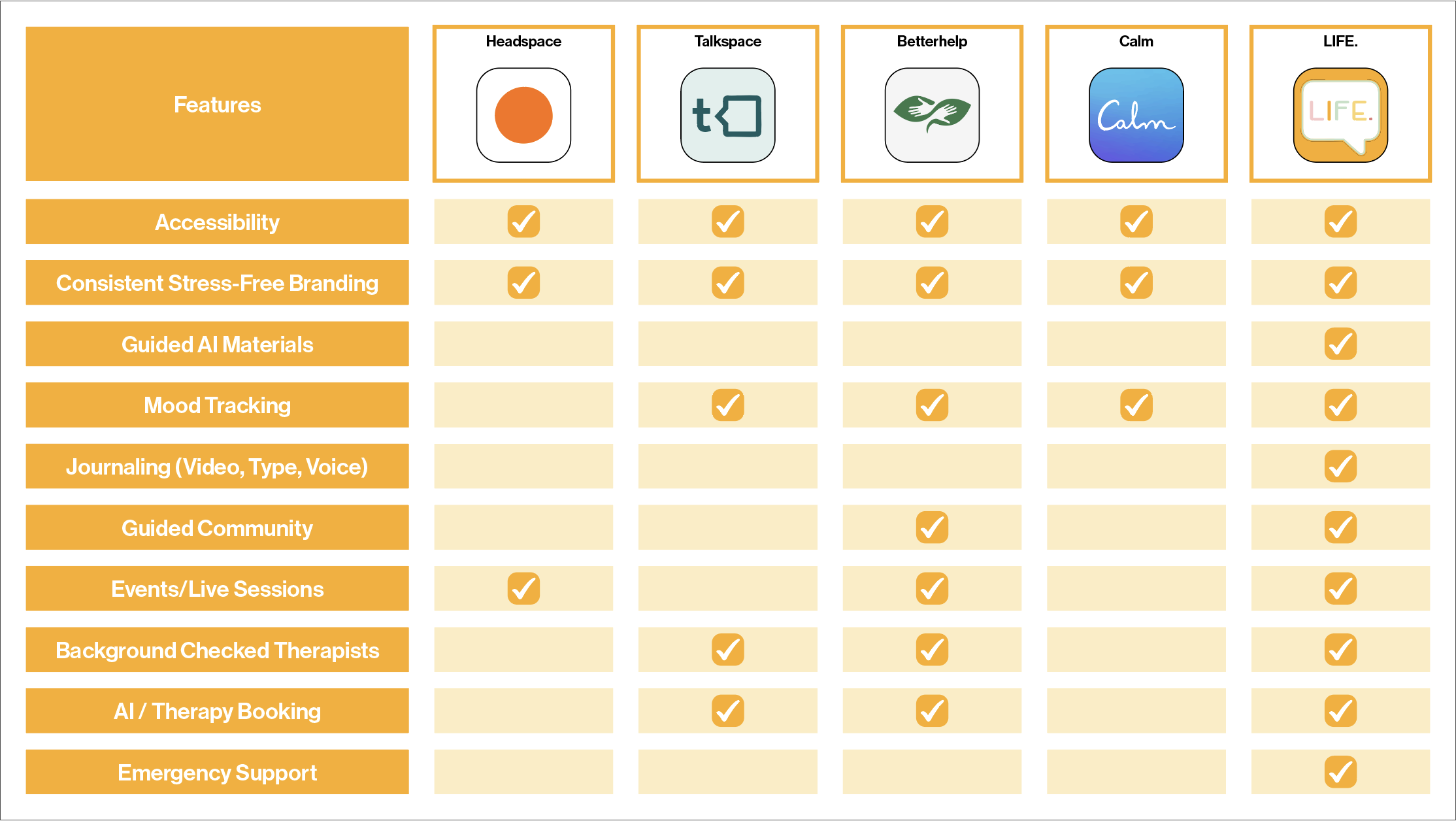
A competitive review of leading mental health platforms—Headspace, Talkspace, BetterHelp, and Calm—revealed an opportunity for a hybrid experience combining:
LIFE. stands out by integrating all of these features into one cohesive, youth-focused ecosystem.
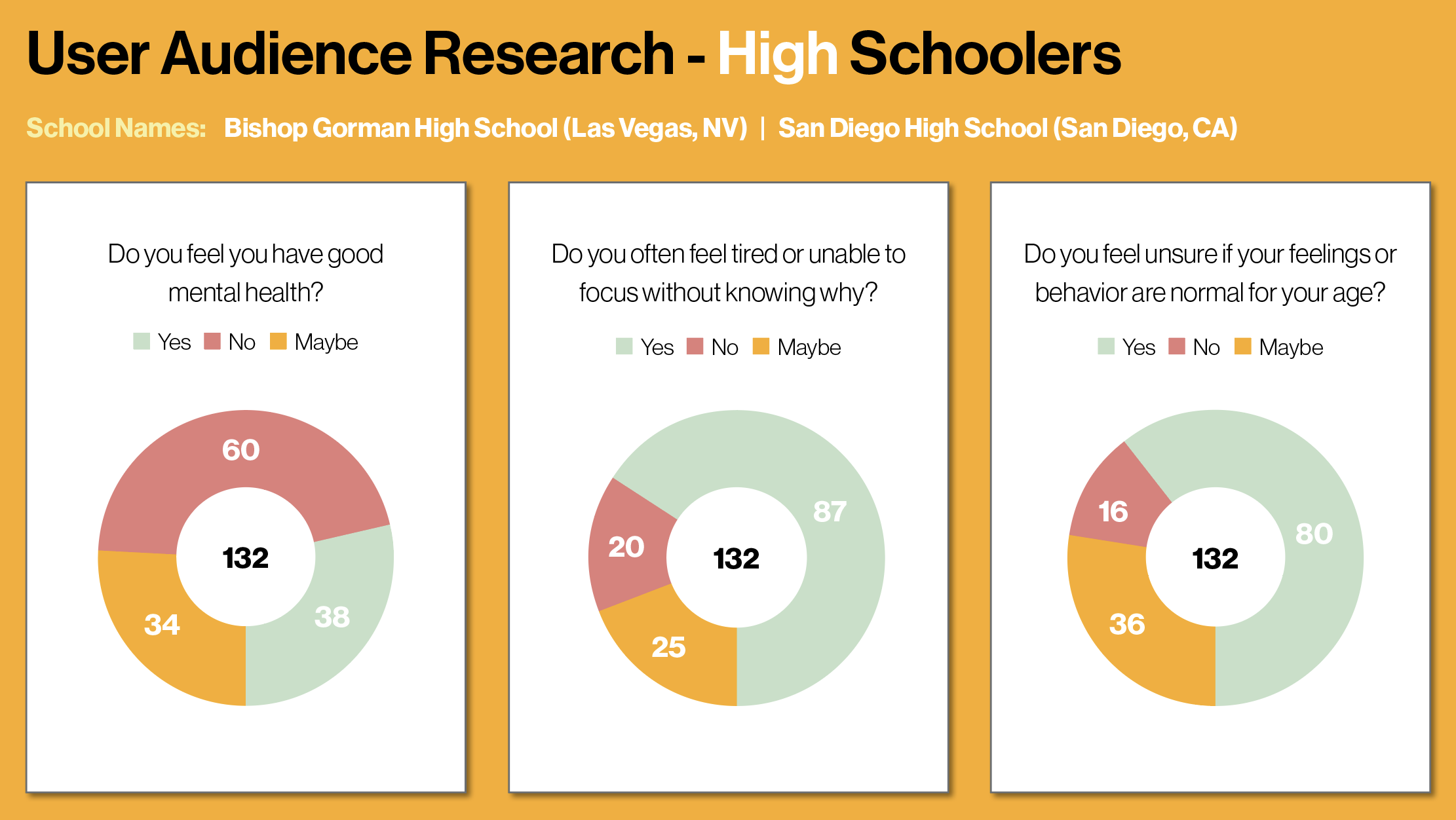
Surveys conducted at Bishop Gorman High School (Las Vegas) and San Diego High School revealed:
These findings strengthened the need for a judgment-free mobile tool where teens can explore feelings privately but still access real support.
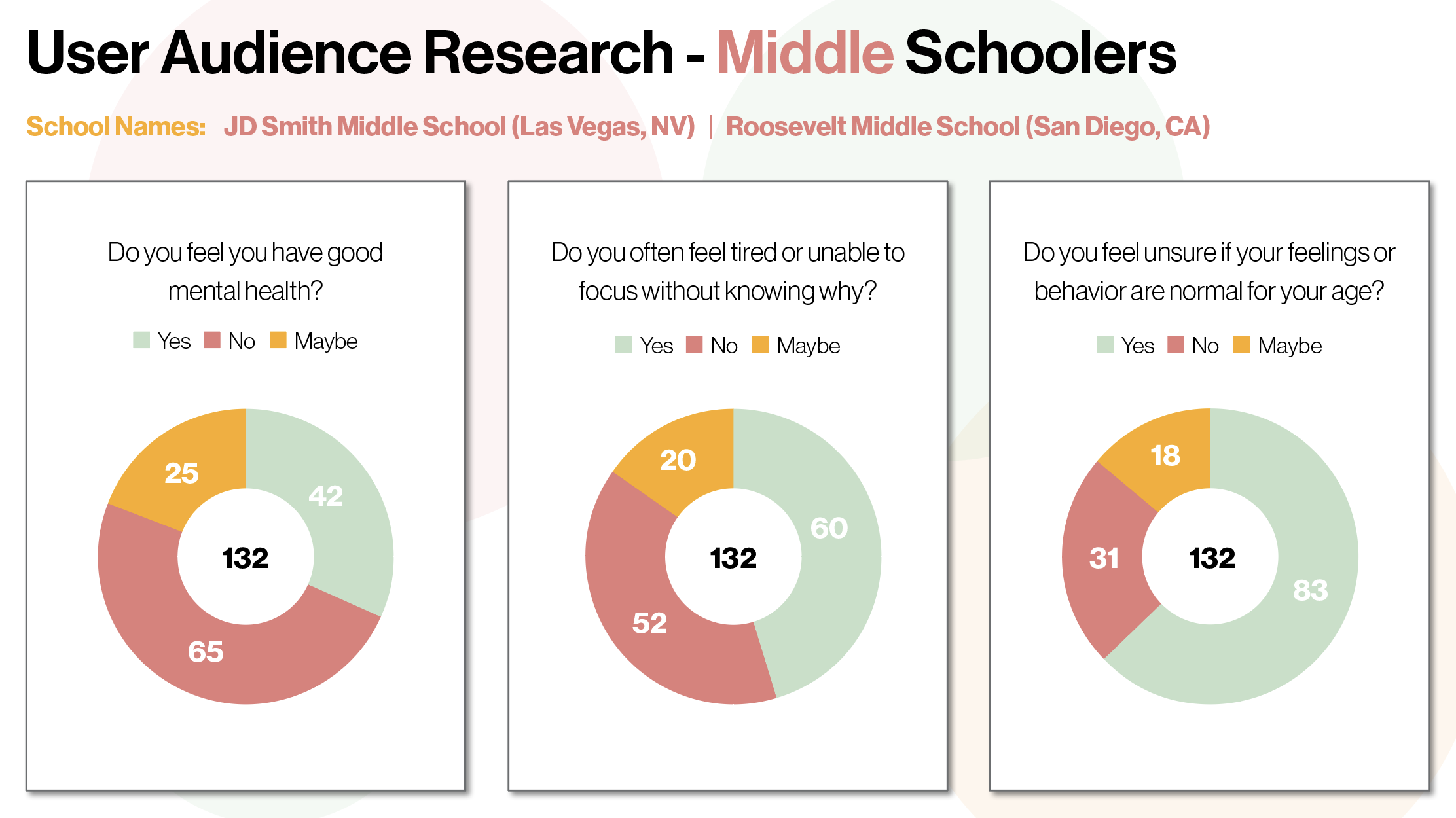
Middle school surveys across JD Smith Middle School (Las Vegas) and Roosevelt Middle School (San Diego) showed:
Introducing mental wellness tools early can help young students understand, name, and normalize emotions— building a foundation for healthier emotional habits as they grow.
LIFE. evolved through experimentation, feedback, and a desire to create a supportive digital space that feels warm, clear, and emotionally intuitive. Below is a look at the visual journey—from early concepts to the final creative direction.
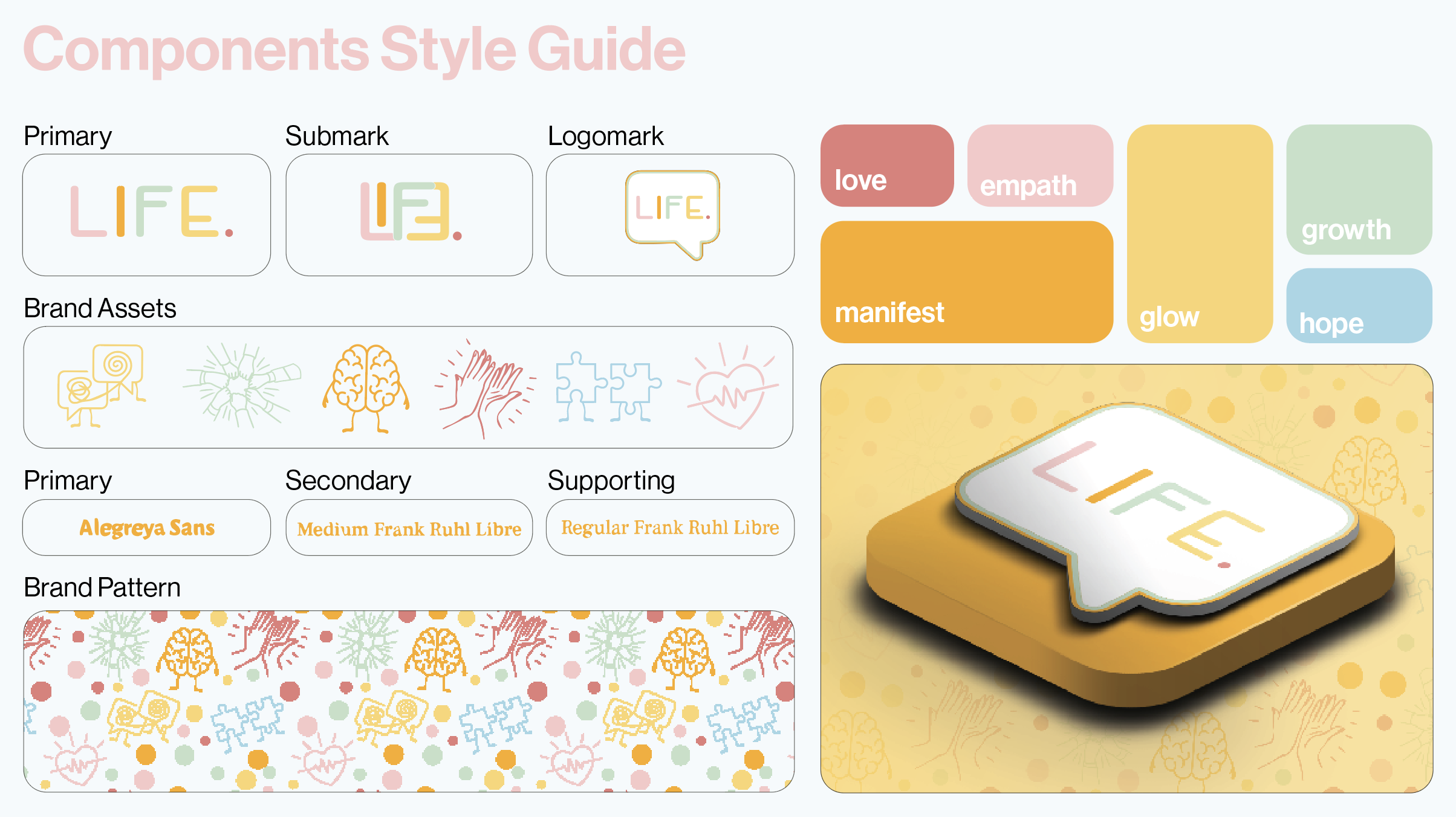
The early stages of LIFE. began by exploring color palettes, typography, illustration styles, and brand assets. I experimented with soft tones, friendly shapes, and organic line work to build an identity that feels calming and empathetic.
These foundational elements helped define LIFE.'s recognizable personality—warm, inviting, and emotionally reassuring.
Early prototypes revealed several challenges. Some visuals were too dainty and soft, making hierarchy and readability difficult. Muted tones blended into backgrounds, and contrast needed improvement for accessibility.
Through refinement, I introduced stronger color balance, improved spacing, clearer typography, and a more grounded tone—while keeping the emotional softness that defines the brand.
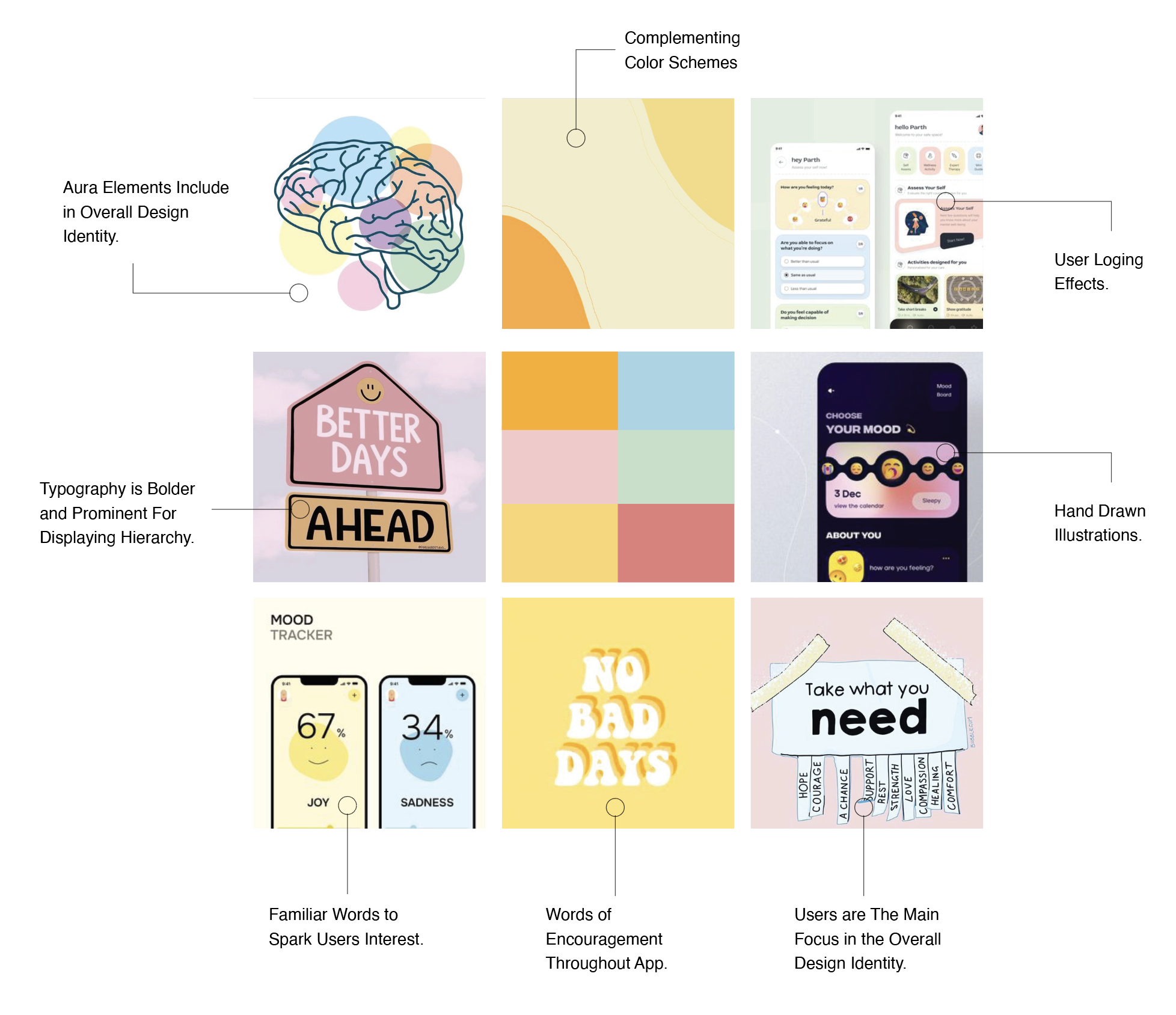
The moodboard shaped LIFE.'s emotional tone—gentle gradients, soft pastels, expressive illustrations, and familiar phrases of encouragement.
This established a visual system that makes users feel welcomed, grounded, and emotionally supported.
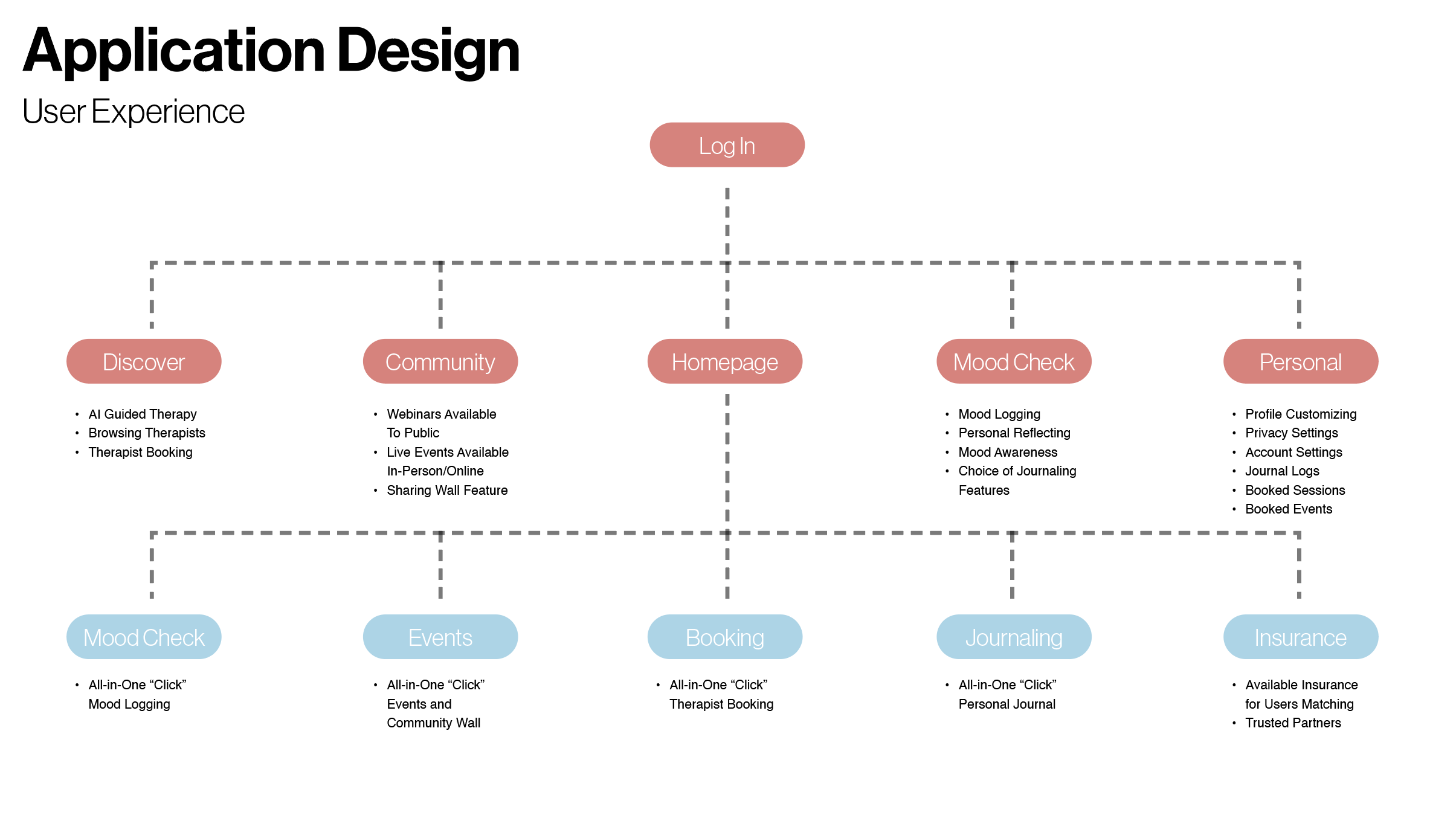
The LIFE. user flow map was designed around emotional ease. Whether users explore AI therapy, journaling, community events, or personal settings, every step is meant to feel intuitive and low-pressure.
Users follow a clear journey that adapts to their needs—never feeling lost or overwhelmed.
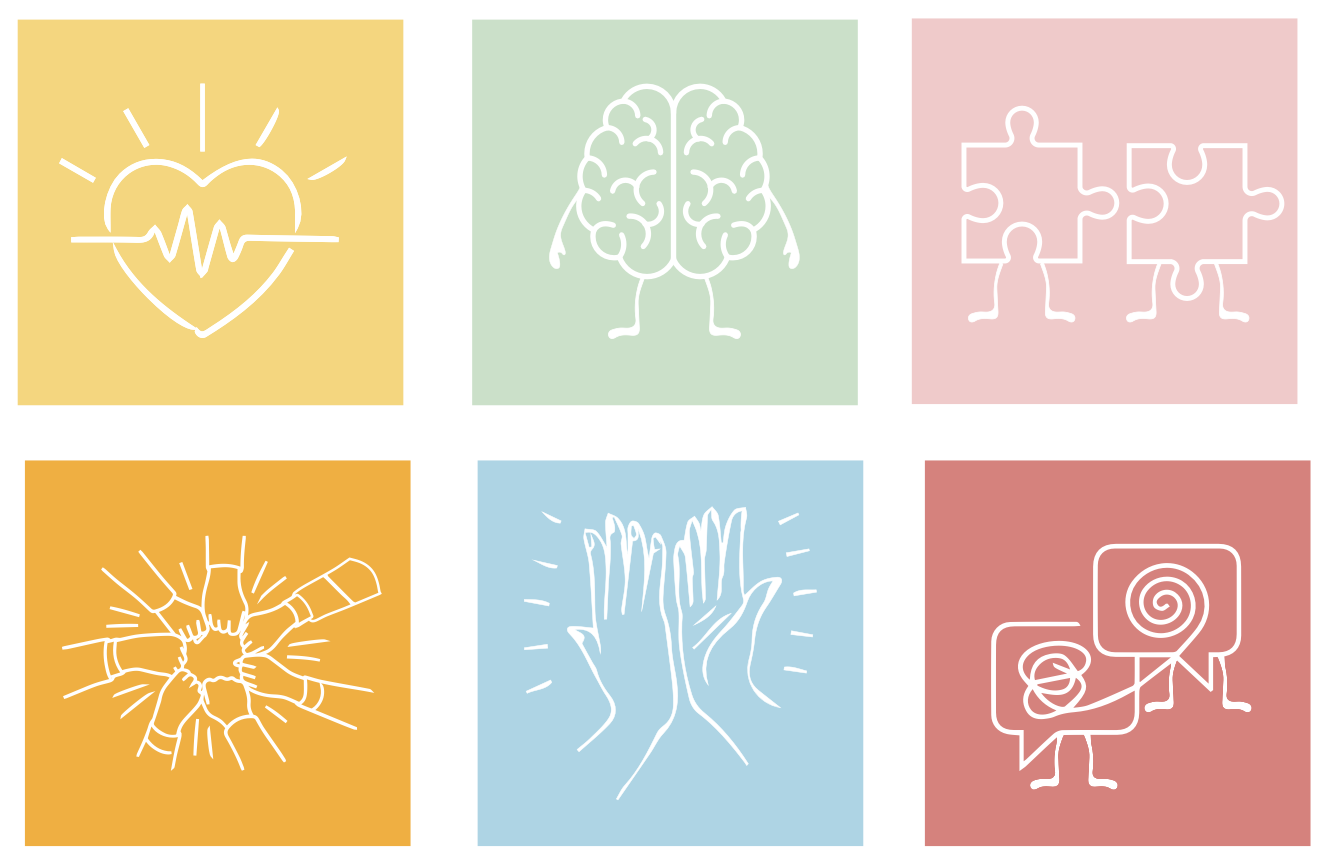
I refined expressive line-based illustrations representing emotion, connection, and healing.
These illustrated assets appear throughout the experience—supporting onboarding, journaling, therapy, and reflective moments.
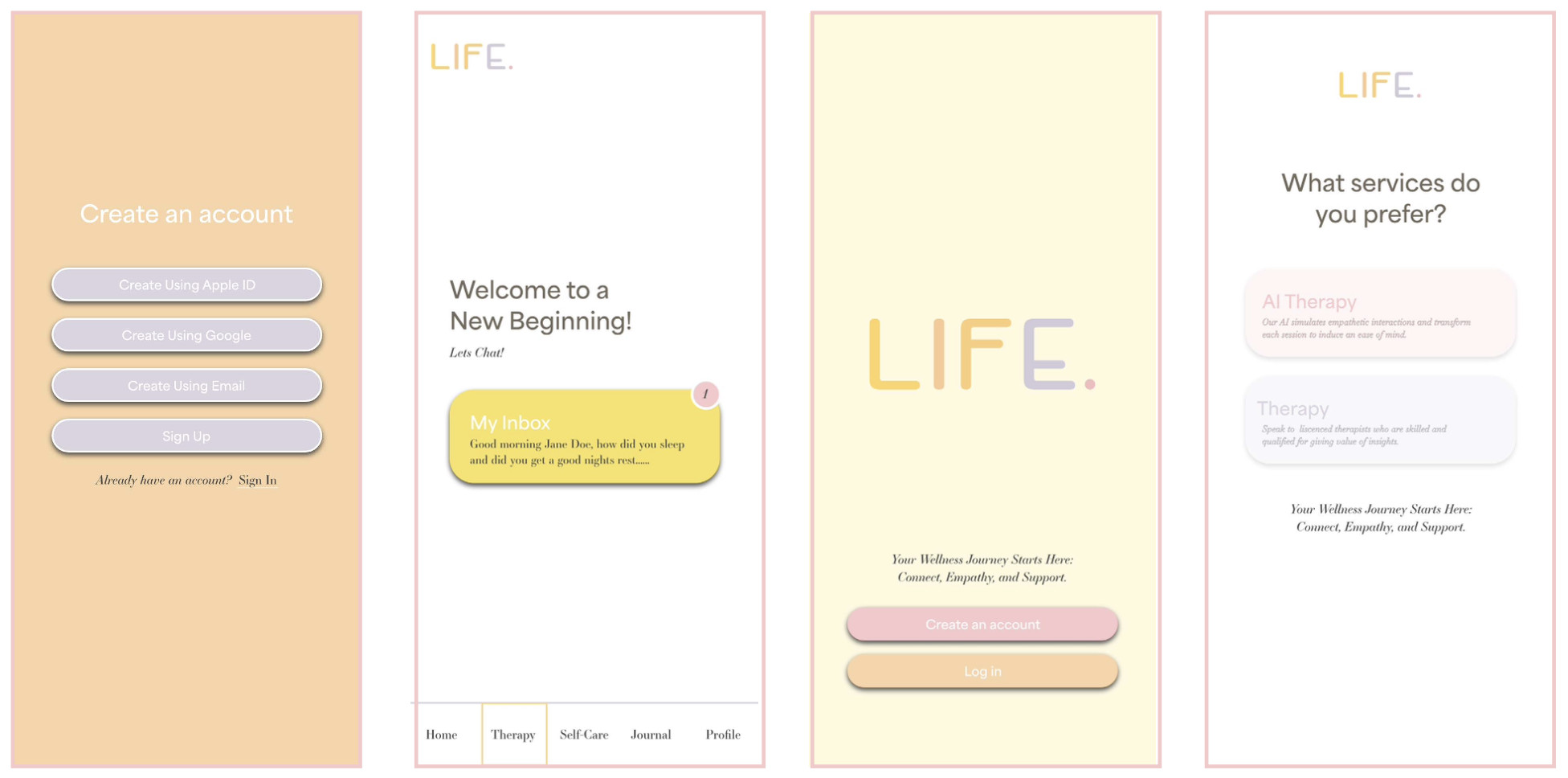
The final screens reflect a polished visual system—improved hierarchy, balanced color palette, stronger contrast, and intuitive layout.
LIFE.'s finished UI feels warm, clear, and supportive, creating an emotionally grounding experience for young users navigating their mental wellness.
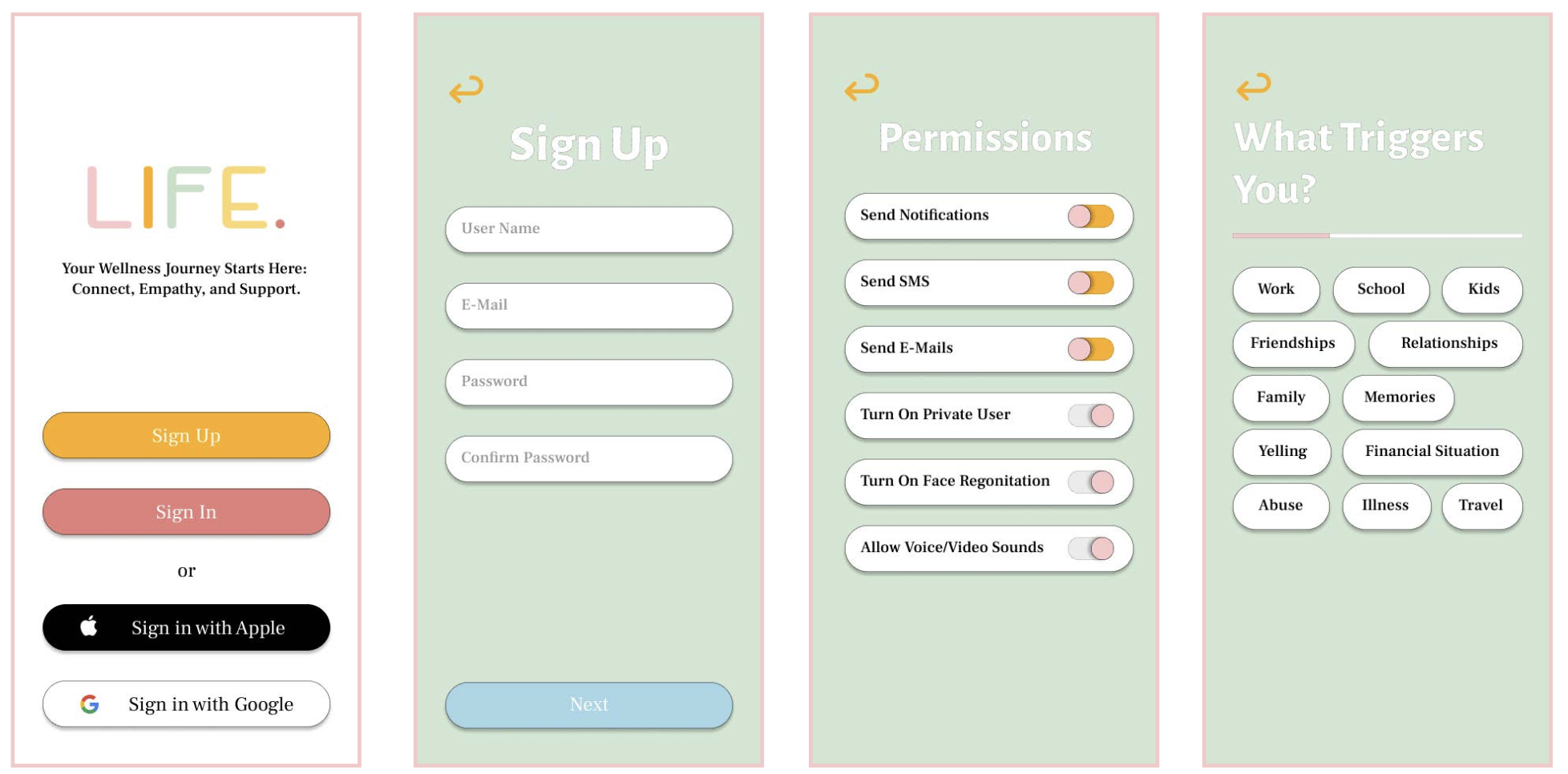
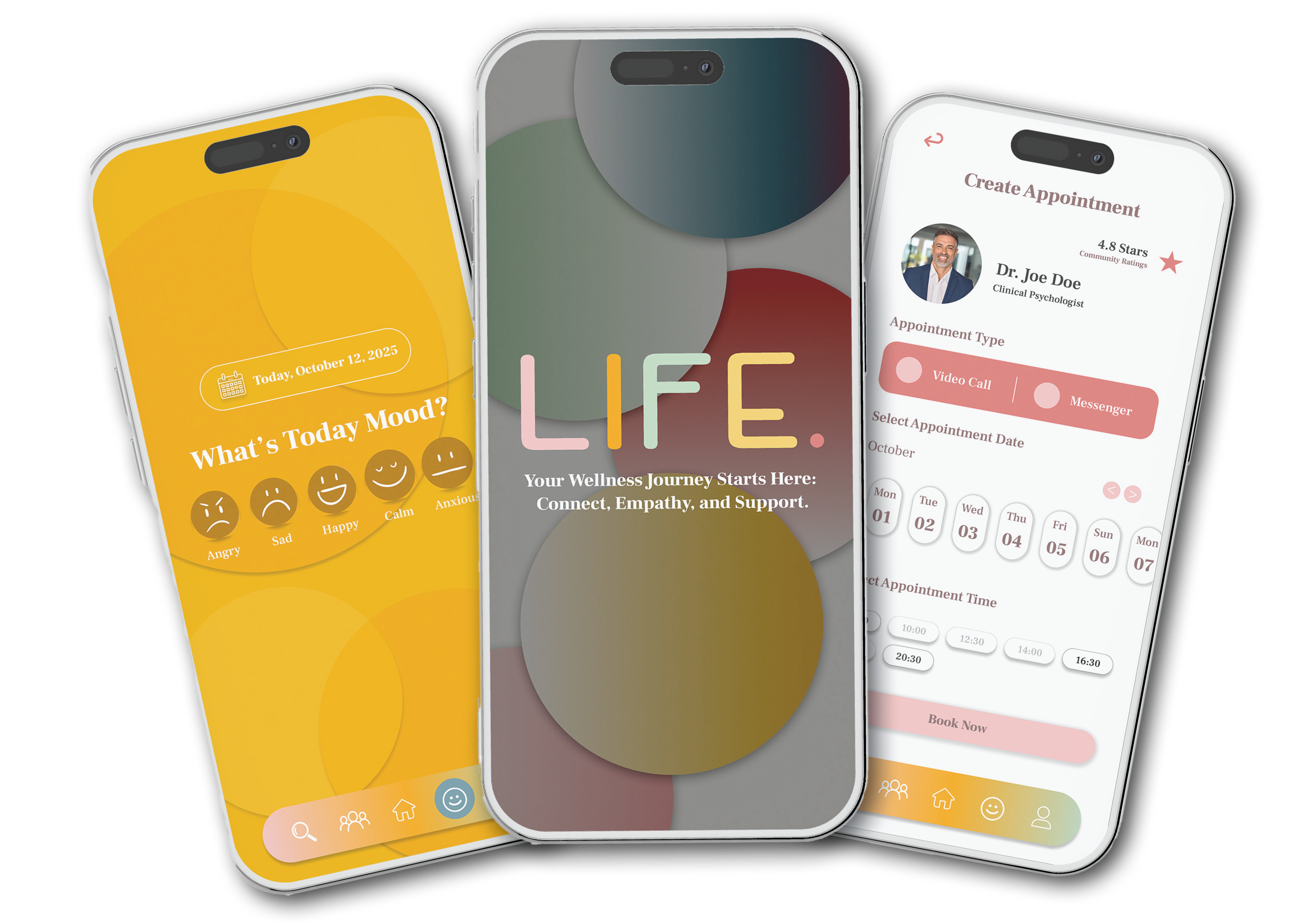
Explore the final LIFE. application design below.
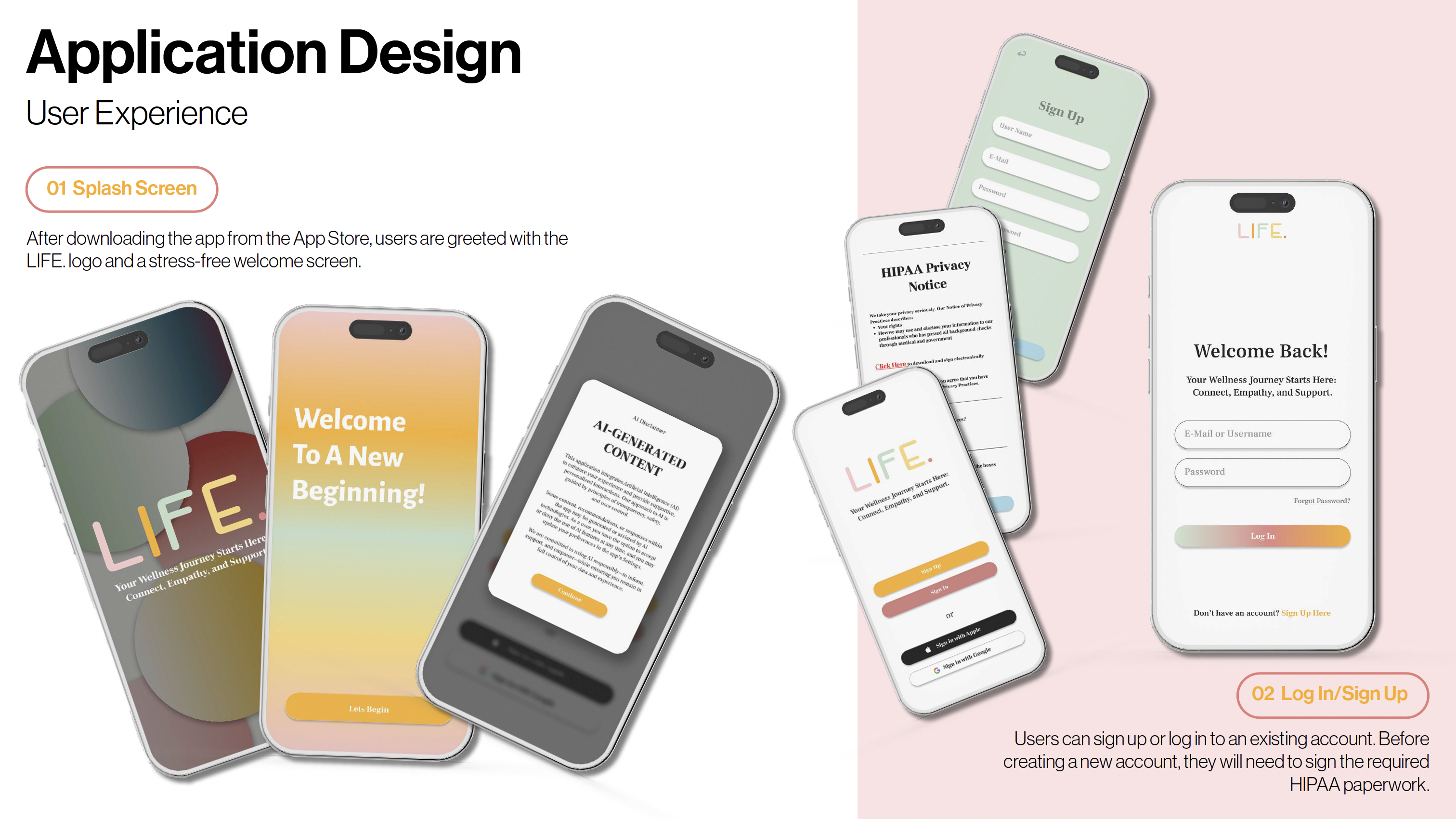
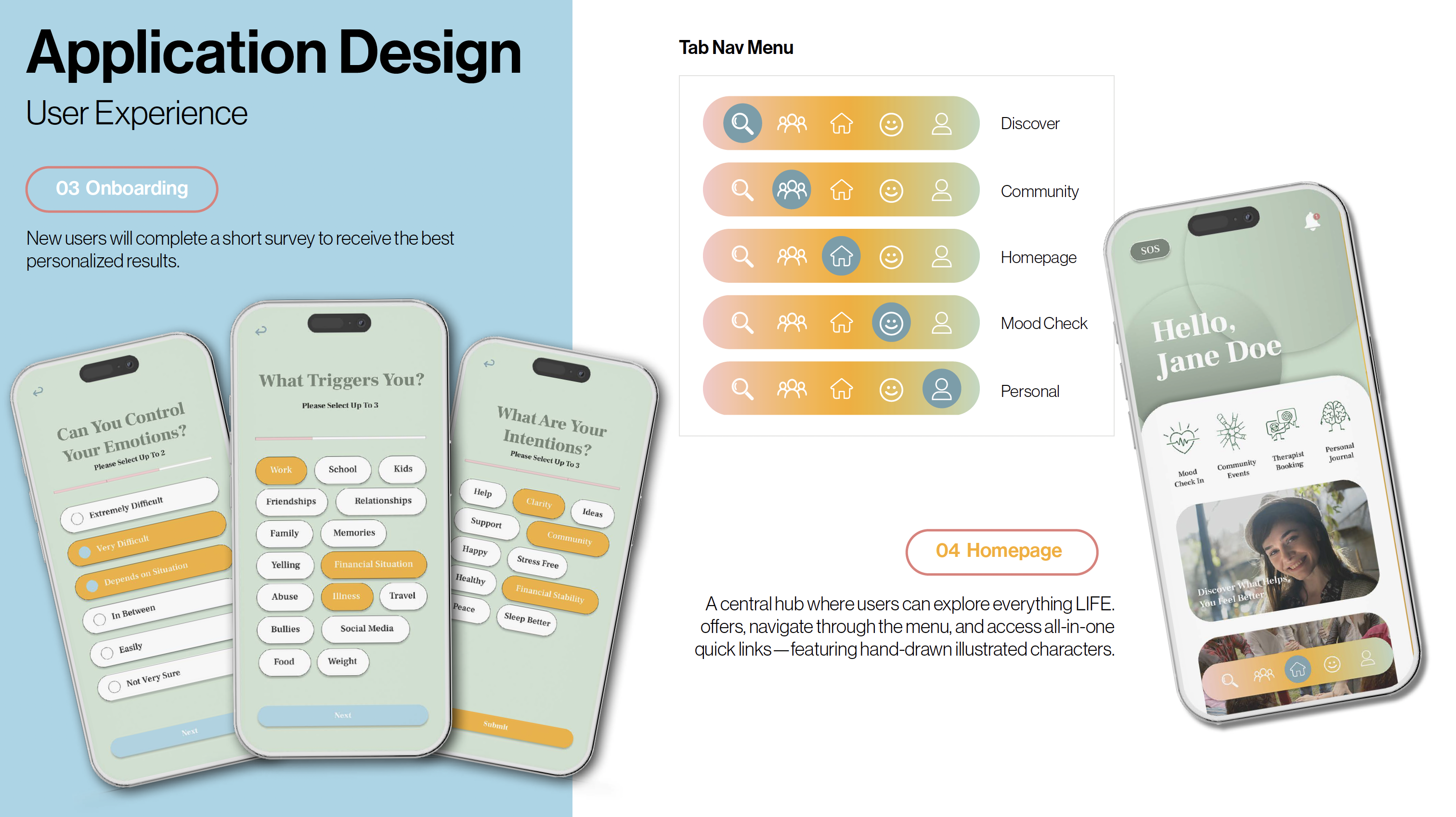
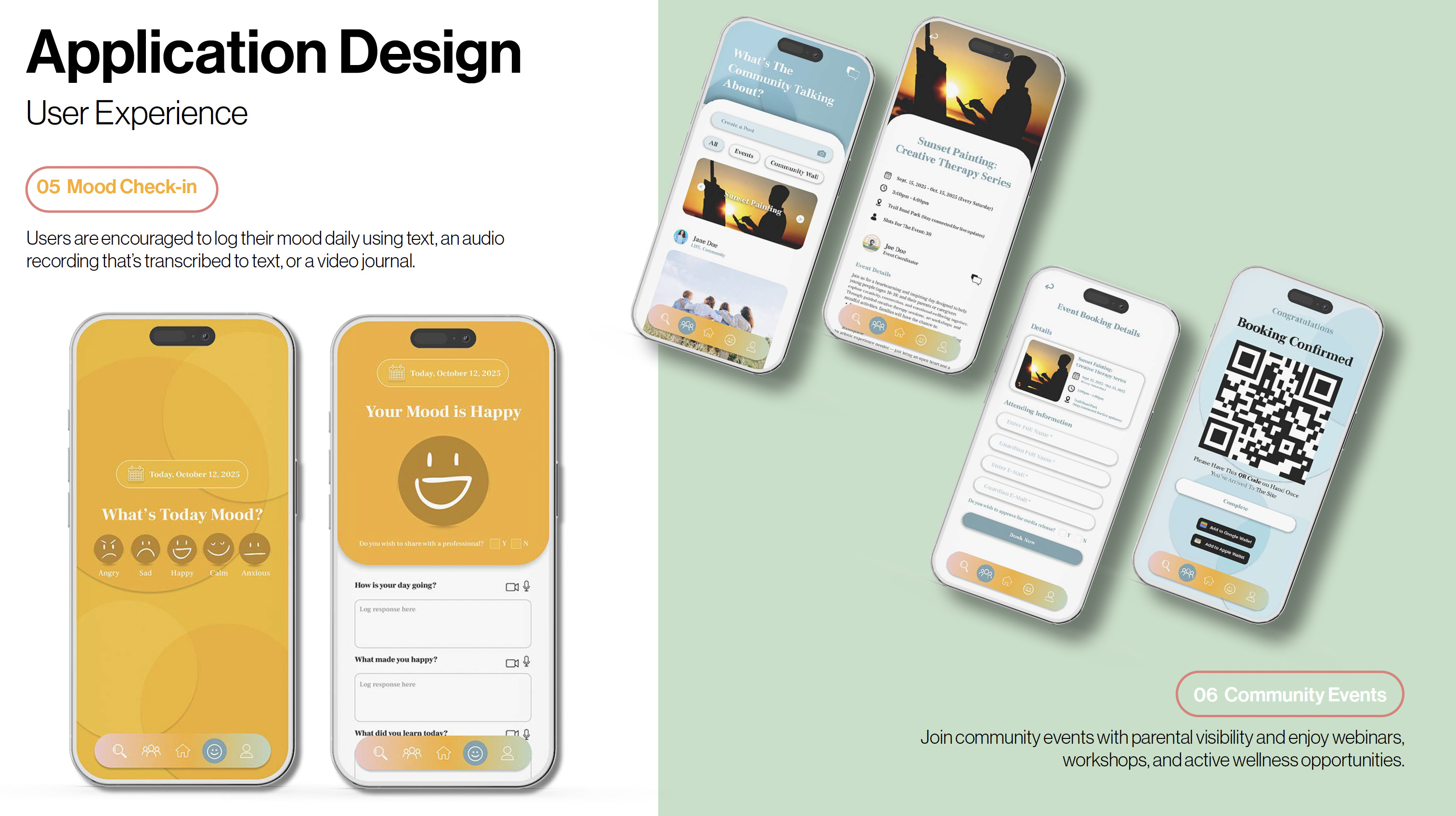
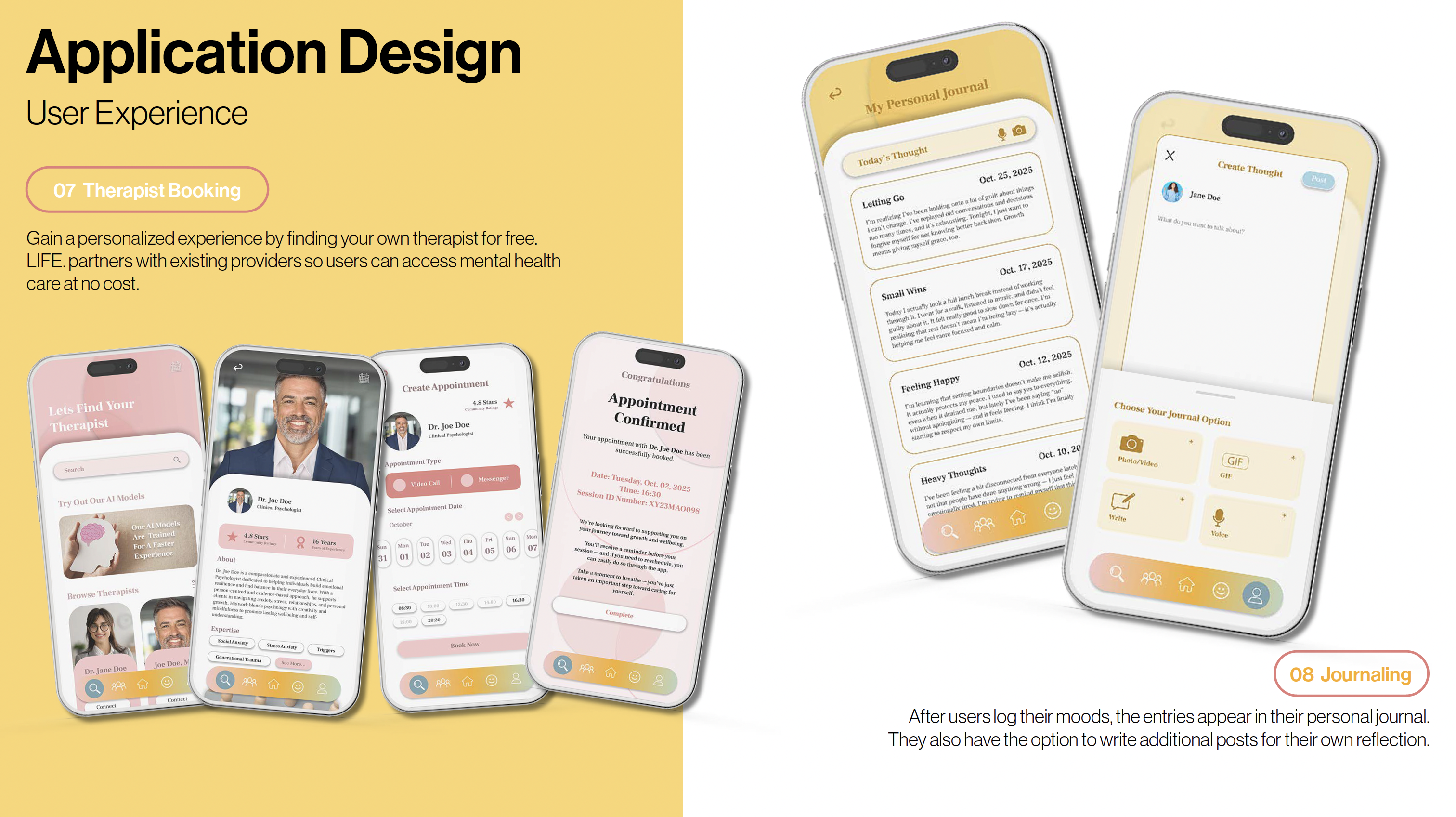
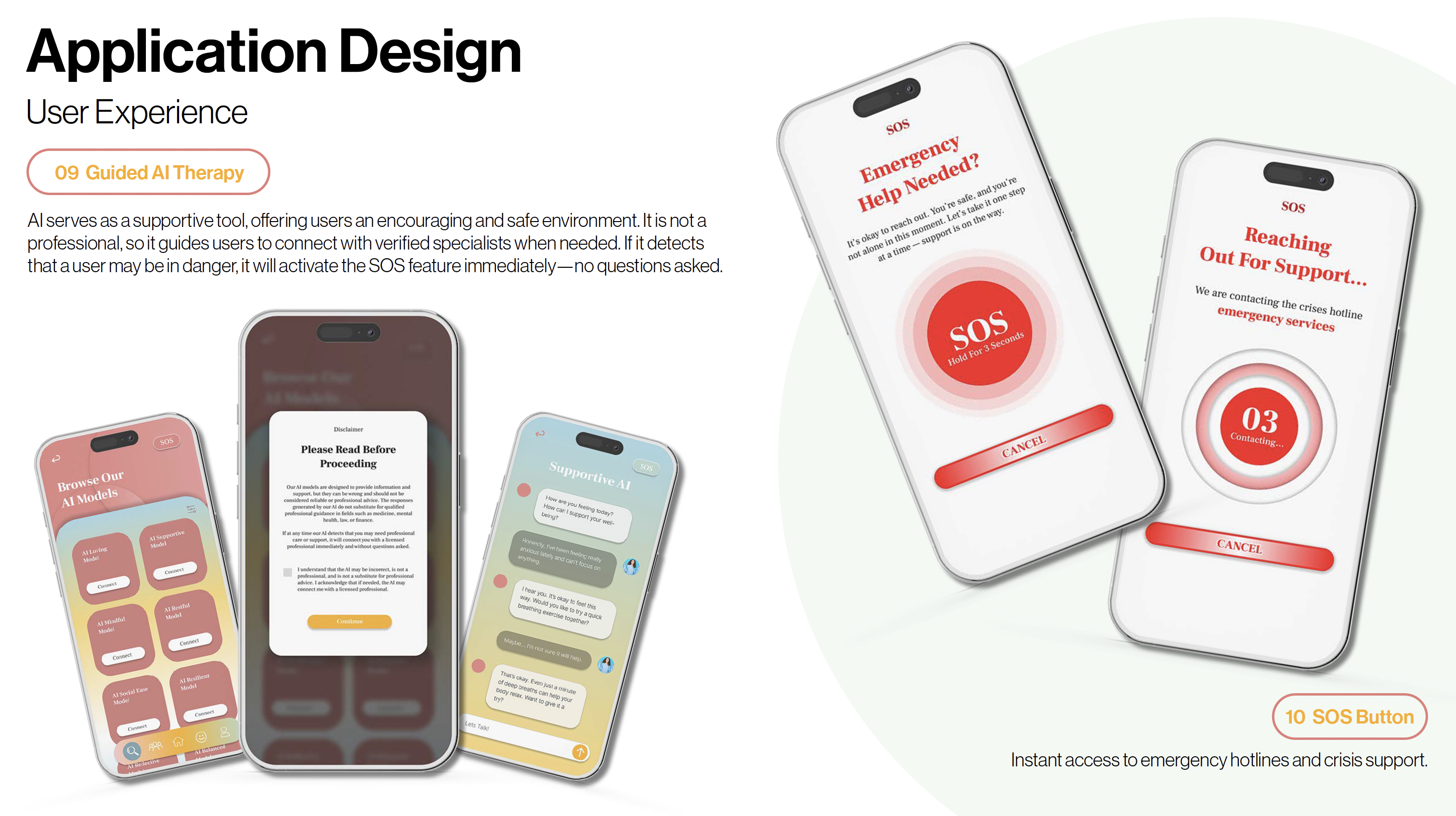
With that, this creates a complete emotional ecosystem—one that meets users where they are and guides them toward support, connection, and self-understanding. LIFE. creates a safe, warm, accessible path for young people to understand their emotions.
As we reach the end, I want to invite you to pause and ask your younger self one simple question: “How are you?” Think about what your younger self would've needed—what would have helped them feel heard, supported, and understood. This question is the same question that was asked throughout her childhood, even when she didn't have the words to answer. Now ending this here, she learned, and she discovered that therapy isn't a weakness, it's an opportunity. An opportunity for reflection, support, and healing. LIFE. is inspired by the girl you see above. The girl who kept searching, even when all she could say was—“It's life.”
Developing LIFE. has been one of the most meaningful and transformative experiences of my graduate journey. What began as a personal story evolved into a strategic, research-driven design solution shaped by real users, iterative testing, and applied theory. Using tools such as Figma, Adobe Creative Suite, and VS Code, I translated raw ideas into wireframes, prototypes, brand systems, and a functional digital experience. My data collection—from student surveys to competitor analysis and expert feedback—provided a foundation for understanding real emotional needs, while feedback loops with classmates, teachers, and subject matter experts helped refine the design with clarity and purpose. Applying UX principles, mental health research, and human-centered strategy allowed me to move beyond “making an app” and instead craft a safe, empathetic ecosystem grounded in accessibility, emotional intelligence, and user trust. LIFE. represents not only my growth in design thinking and technical execution, but also my commitment to creating meaningful, culturally aware experiences that uplift and support young people—especially those who, like my younger self, needed a space to feel seen and understood.
This project is inspired by my younger self—and every young person searching for guidance.